
Legacy-Device CER Updates Under MDR
Where Auditors Find the Gaps in 2026
"A legacy CER rarely fails because of a single major deficiency. Most review findings emerge when multiple evidence gaps accumulate over time and the clinical narrative no longer reflects the current regulatory reality." - Dr Alastair Selby, Managing Director, Scimed Consultancy Ltd

by Dr
Nadhim
Bayatti
Senior Analyst, SciMed Consultancy Ltd
EXECUTIVE SUMMARY
Legacy CER updates remain a common source of MDR review findings.
Many deficiencies stem from evidence frameworks carried forward from MDD without revalidation.
Equivalence drift, outdated state-of-the-art sections, and weak literature methodologies are recurring audit concerns.
CERs frequently fail when PMS, PMCF, risk management, and clinical evaluation are not fully aligned.
Proactive gap assessment helps identify weaknesses before they become certification delays.
INTRODUCTION
Updating Clinical Evaluation Reports (CERs) for legacy medical devices is critical under EU MDR because clinical evaluation is a continuous lifecycle process tied closely to surveillance and submission cycles, rather than a static, one-time document.
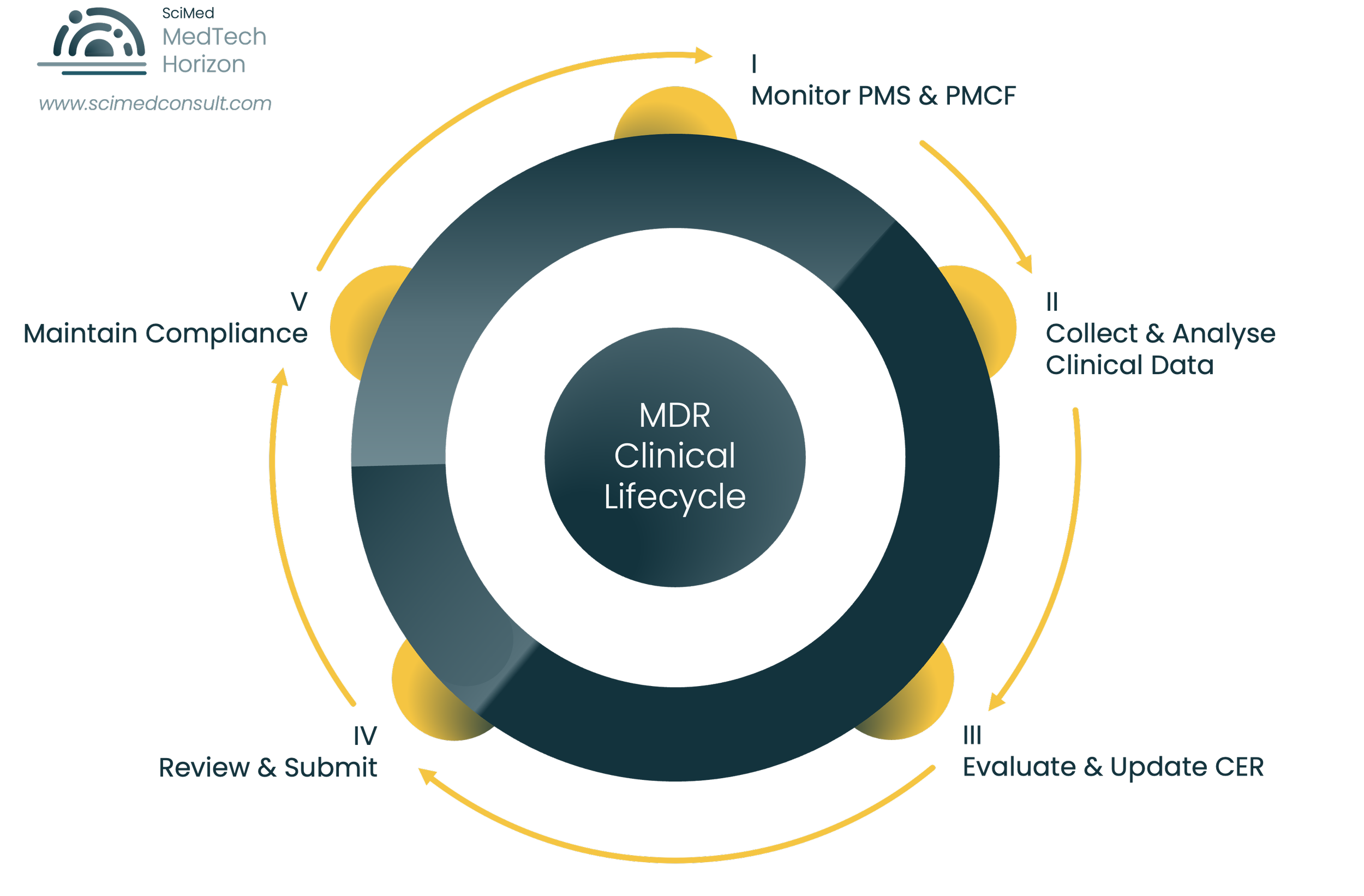
Manufacturers must ensure CERs are regularly updated in line with post-market surveillance (PMS) and post-market clinical follow-up (PMCF) outputs to maintain alignment with evolving clinical and safety data, and state-of-the-art expectations ahead of MDR submission deadlines in 2027–2028. However, these updates often fail during notified body review due to predictable shortcomings.
Manufacturers frequently treat CER updates as minor document revisions rather than comprehensive evidence re-evaluations, leading to gaps in demonstrating clinical benefit, risk–benefit balance, and current clinical relevance. In a submission-cycle context, these deficiencies often result in non-conformities, review delays, or certification failure, undermining the ongoing justification for continued market access. Consequently, proactive, evidence-driven updates, grounded in robust data integration and systematic gap analysis, are essential to ensure compliance and avoid predictable regulatory setbacks.
INDUSTRY CONTEXT & BACKGROUND
As manufacturers prepare legacy devices for MDR certification and renewal activities, notified bodies are increasingly scrutinising whether Clinical Evaluation Reports have evolved alongside the evidence base supporting the device. Common review findings often arise from:
Equivalence claims that have not been revalidated under MDR requirements
State-of-the-art sections that no longer reflect current clinical practice
Weak or outdated literature review methodologies
Poor integration between CERs, PMS activities, and PMCF outputs
Benefit-risk conclusions that are descriptive rather than evidence-driven
Device claims that have expanded beyond the available clinical evidence
Many CER deficiencies emerge gradually as documentation, evidence, and regulatory expectations evolve at different rates. The distinction between a defensible legacy CER and a costly review finding often lies in how effectively manufacturers maintain alignment between clinical evidence, risk management, post-market data, and intended use over time.
COMMON ISSUES AND HOW TO AVOID THEM
Equivalence Drift
Problem: Equivalence drift occurs when a CER continues to rely on an older comparator without re-validating its regulatory status, intended use, or evidence base. This surfaces frequently in legacy-device updates because equivalence justifications accepted under MDD are carried forward without reassessment under stricter MDR expectations. An audit reviewer typically sees a static, out-of-date, equivalence table, often unsupported by current technical, biological, and clinical comparability evidence. The comparator may no longer be CE-marked, or its claims may have changed, yet the CER presents it as unchanged.
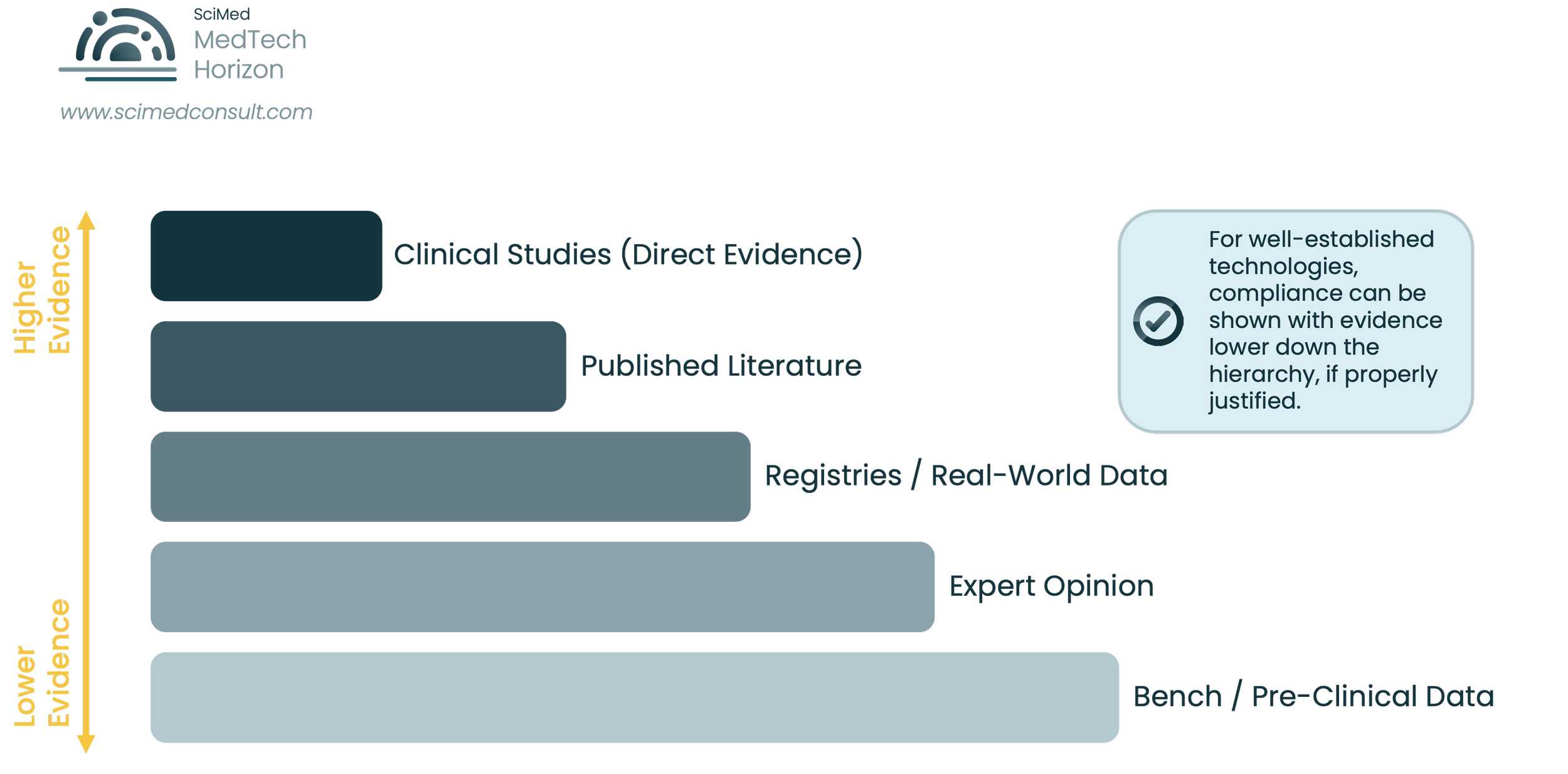
Solution: Ensure equivalence is explicitly re-tested, the comparator certification status is confirmed, intended use comparisons are updated and demonstrate access to sufficient technical documentation. Consider abandoning equivalence in favour of direct clinical evidence, which for well-established technologies rests at a lower level of hierarchy than novel devices
Further Reading: MDR Article 61(4)–(6); MDCG 2020-5
Pro Tip
Reconfirm the certification status of every equivalence comparator before relying on it, especially if you even have access to their data. A comparator accepted five years ago may no longer support your current justification.
Frozen State-of-the-Art (SotA)
Problem: A frozen SotA reflects outdated clinical practice, often anchored to the original CER publication date rather than current standards. This is common in legacy updates because CERs are treated as static documents instead of living evaluations. Auditors typically see literature clustered around a narrow historical window, missing recent guidelines, competitor technologies, and evolving treatment paradigms. This creates misalignment between the device and current clinical expectations.
Solution: A robust SotA section demonstrates an up-to-date and when applicable, systematic literature review, integrates current clinical guidelines, incorporates recent MDCG guidance, and compares alternative technologies relevant to the indications of the device. It explicitly shows how the device performs relative to current clinical practice, not historical benchmarks.
Further Reading: MDR Annex XIV, Part A
Pro Tip
A State-of-the-Art review should demonstrate how clinical practice has evolved; not simply confirm that your device still exists within it.
Weak “Well-Established Technology” (WET) Rationales
Problem: Article 61(10) and the Well-Established Technology (WET) approach differ fundamentally in how they justify clinical evidence for legacy devices. Article 61(10) is a narrowly applied legal provision that allows manufacturers to justify the absence of clinical data based primarily on non-clinical evidence, but this route carries a very high burden of justification and is rarely accepted by regulators. In contrast, WET is a widely recognised regulatory approach for established devices, relying on substantial existing clinical data such as published literature and post-market experience to demonstrate safety and performance without conducting new clinical investigations. While both approaches can reduce the need for new studies, WET still requires a robust, data-driven CER, making it the more appropriate and commonly accepted pathway for demonstrating compliance of legacy devices under the MDR.
Solution: A rigorous approach is needed to demonstrate why clinical data is unnecessary (if claimed using the Article 61(10) approach), while WET requires rationales supported by current literature, PMS data, and clear justification aligned to MDCG 2020-6. Where thresholds are not met, manufacturers need to supplement with additional clinical investigations or PMCF data instead of relying on legacy assumptions
Further Reading: MDR Article 61(10); MDCG 2020-6
Pro Tip
A device being on the market for many years does not automatically make it a Well-Established Technology under MDR.
Weak Literature Search Methodology
Problem: Legacy CERs often include literature reviews written to older MEDDEV expectations, lacking the systematic rigour now required. This persists because many manufacturers update content but not methodology. Reviewers often see incomplete protocols, poorly defined search strings, vague inclusion/exclusion criteria, and weak appraisal traceability. The absence of reproducibility is a common finding.
Solution: The use of a predefined protocol (e.g. use of the PICO framework), developing comprehensive, well-documented search strategies with justified keywords, synonyms, and Boolean operators, and searching multiple relevant databases (such as PubMed, Embase, and Cochrane) to ensure completeness. Searches should be systematically documented and reproducible, with predefined inclusion/exclusion criteria and a rationale for limitations (e.g., date limits). This includes critical appraisal methods linked to quality and relevance to indications, safety and performance claims.
Further Reading: MDR Annex XIV Part A(3); Team-NB clinical evaluation position papers
Pro Tip
If another evaluator or auditor cannot reproduce your literature search from the documentation provided, your methodology may not withstand scrutiny.
Narrative, Not Quantified Benefit–Risk Analysis
Problem: Under MDD, qualitative benefit–risk narratives were often accepted; under MDR, this approach is insufficient. Legacy updates frequently fail because they retain descriptive rather than quantitative reasoning. Auditors see broad statements such as “benefits outweigh risks” with minimal numerical support or linkage to the risk management file.
Solution: A compliant CER quantifies clinical benefits and residual risks where possible, aligns outcomes with measurable endpoints, and explicitly reconciles conclusions with the risk management documentation (ISO 14971 outputs). The benefit–risk balance should clearly be justified using up-to-date data.
Further Reading: MDR Annex I; MDR Annex XIV
Pro Tip
Statements such as "benefits outweigh risks" carry little weight unless they can be traced to measurable clinical outcomes and current risk data.
PMCF–CER Disconnect
Problem: A major failure pattern is the lack of integration between PMCF outputs and CER updates. This arises because PMS systems evolve separately from legacy CER content. This lack of integration can lead to CERs that are outdated, incomplete, and not reflective of the current safety, performance, or benefit–risk profile of the device, ultimately undermining residual risk justification and violating MDR requirements for continuous clinical evaluation. Reviewers often find inconsistencies: PMCF flags safety signals or uncertainties, while the CER presents stable benefit–risk conclusions without acknowledging them.
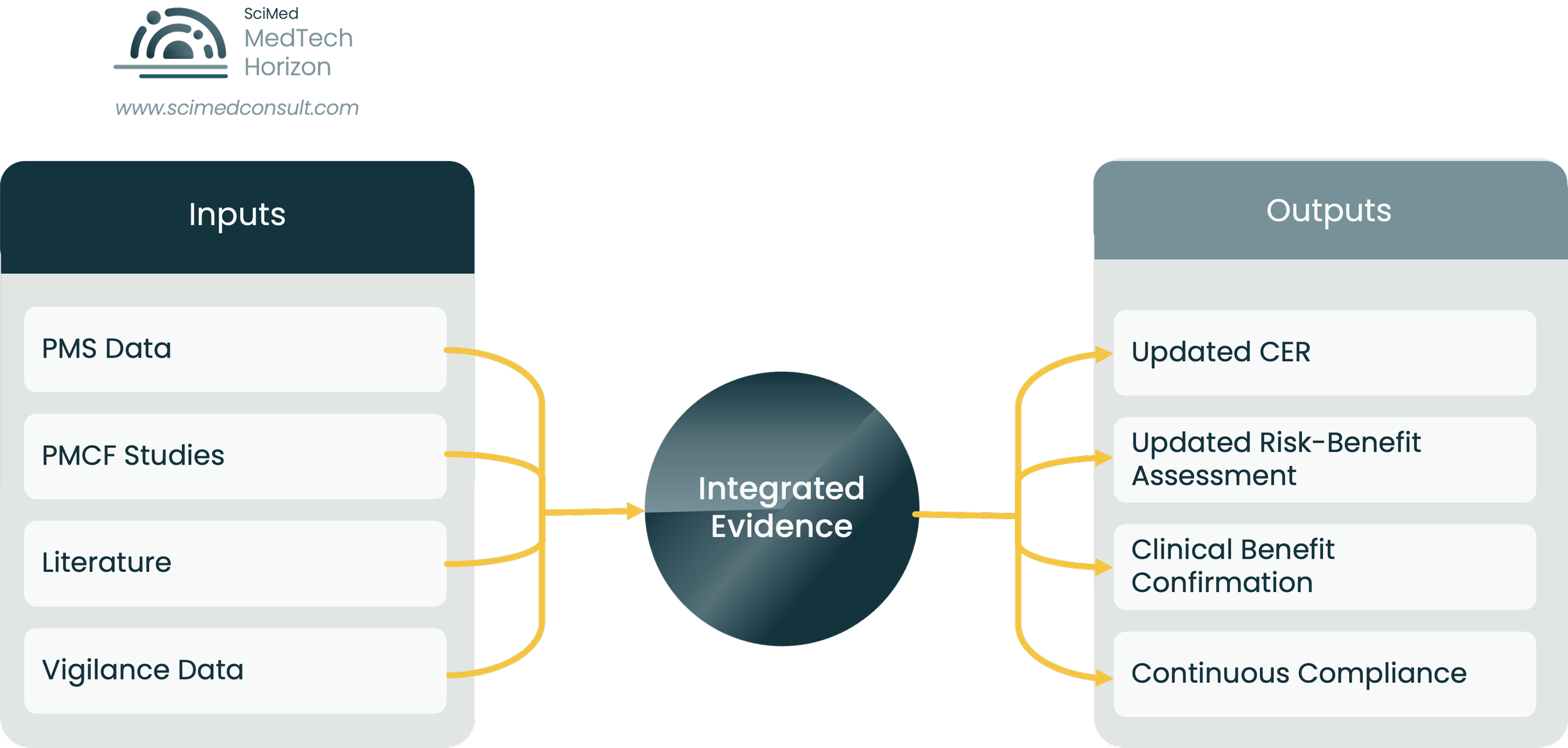
Solution: A CER must integrate PMCF findings directly, demonstrating how real-world data supports, or updates, clinical conclusions. The CER, PMCF plan, and PMS reports form a coherent narrative with aligned risk–benefit conclusions.
Further Reading: MDR Article 61(11); MDR Annex XIV Part B; MDCG 2020-7
Pro Tip
PMCF findings should not sit in isolation. Every meaningful PMCF output should influence the clinical narrative, risk profile, or evidence strategy within the CER.
Outdated Residual-Risk Justification
Problem: Legacy CERs frequently rely on outdated risk-management assumptions that do not align with ISO 14971:2019 expectations. The identified risks and their estimated probabilities or severities may be outdated, particularly if they do not incorporate post-market data such as PMS or PMCF findings. This results in a mismatch between the actual real-world risk profile and what is presented in the CER. Furthermore, older risk frameworks often used simplified or non-clinically justified acceptability criteria, which may not meet current expectations for demonstrating that residual risks are acceptable or justified by clinicConfirmation.
Solution: The CER must reference current ISO 14971:2019 principles, clearly defining risk acceptability thresholds, and demonstrating that residual risks are acceptable when weighed against quantified clinical benefits. Risk conclusions must also be linked to PMS and PMCF data.
Further Reading: ISO 14971:2019; MDR Annex I
Pro Tip
Residual-risk conclusions should be reviewed whenever PMS or PMCF data identifies new trends, complaints, or emerging uncertainties.
Indication and Claim Creep
Problem: Over time, intended use, indications, or performance claims of a medical device gradually expand beyond what is supported by robust clinical evidence, often without corresponding updates to the clinical evaluation. This is particularly common in legacy devices with long market histories. Broader indications or new patient populations described in IFU or marketing materials are often observed even though the CER evidence remains limited to the original intended use.
Solution: There is a need to implement a strict, evidence-driven control process that ensures all intended uses, indications, and claims are explicitly defined, justified, and continuously aligned with robust clinical evidence. Each claim must be individually supported by relevant clinical data within the CER, with no reliance on extrapolation or assumptions beyond the available evidence. This requires regular review and reconciliation between the CER, regulatory documentation, and labelling to ensure consistency. Where gaps are identified, manufacturers must either generate additional clinical evidence (e.g., via PMCF) or narrow the claims to match the existing data.
Further Reading: MDR Article 7; MDR Annex II
Pro Tip
Compare your CER, IFU, website, and marketing materials annually. Claim creep often appears outside the clinical evaluation process first.
CONCLUSIONS
In conclusion, the gaps observed in legacy CER updates are not isolated issues but interconnected failures to maintain alignment across all elements of clinical evaluation. As manufacturers approach the final MDR transition deadlines for legacy devices, these weaknesses are becoming increasingly visible during notified body review and certification activities.
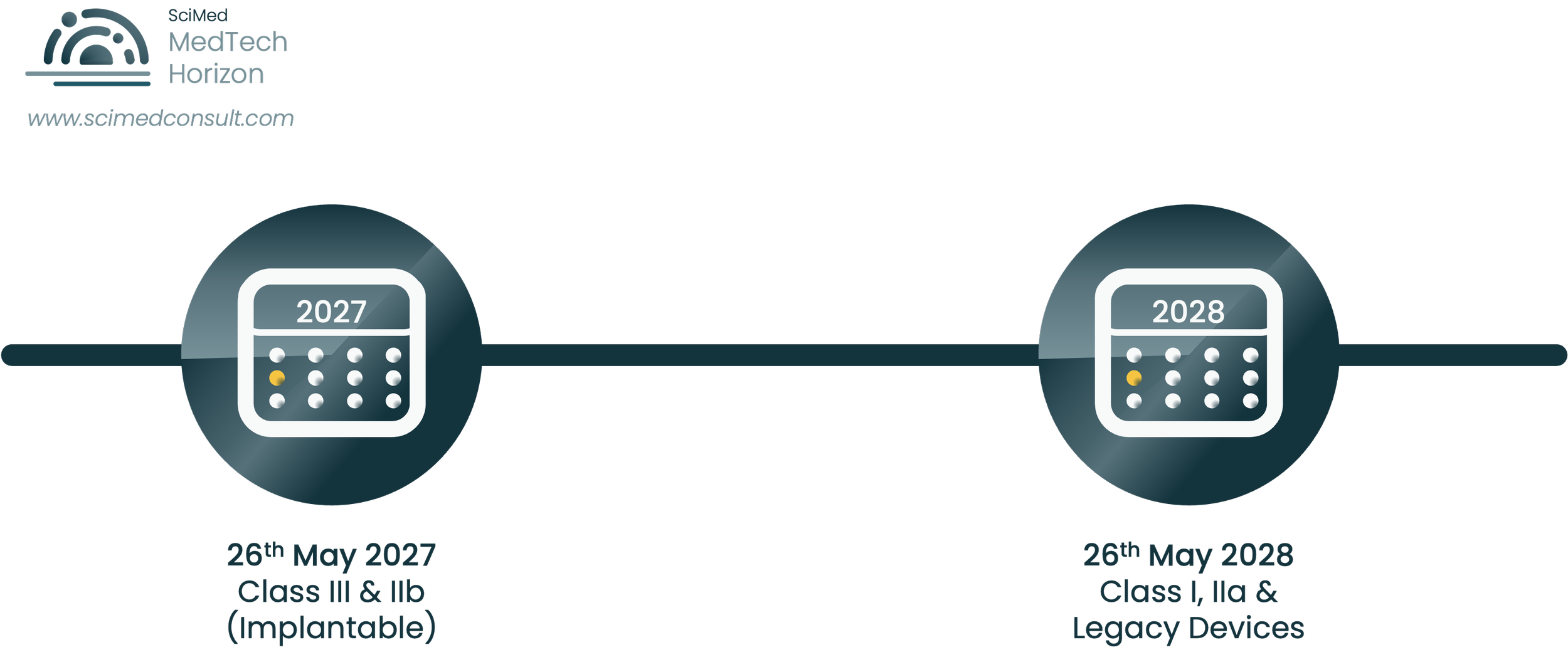
With Class III and implantable legacy devices requiring MDR certification by May 2027, followed by Class I, IIa and IIb legacy devices in May 2028, manufacturers have limited time to identify and remediate deficiencies before submission. Delaying CER updates until immediately before certification often exposes evidence gaps that require significant remediation effort, additional literature activities, PMCF generation, or broader clinical strategy changes.
Equivalence drift reflects a failure to revalidate comparators under MDR, resulting in unsupported claims, while a frozen state-of-the-art demonstrates that the device is no longer benchmarked against current clinical practice. Weak WET rationales or inappropriate reliance on Article 61(10) signal an inability to adequately justify the clinical evidence strategy, and poor literature search methodology undermines the completeness, reproducibility, and credibility of the evidence base. Narrative-only benefit–risk assessments fail to provide objective, data-driven justification when not reconciled with ISO 14971 risk management outputs. The PMCF–CER disconnect weakens compliance by excluding real-world evidence from clinical conclusions, while outdated residual-risk justifications indicate that risk estimates and acceptability criteria are no longer aligned with current standards or post-market data. Finally, indication and claim creep creates a widening gap between what is clinically evidenced and what is marketed.
Addressing these issues requires a coordinated approach in which clinical evaluation, risk management, PMS/PMCF, regulatory strategy, and labelling are continuously aligned. Manufacturers that begin this process early are better positioned to identify evidence gaps, plan remediation activities, and demonstrate that every claim, risk, and conclusion within the CER remains current, traceable, and fully supported by robust clinical evidence.
USEFUL REFERENCES
MDR Article 7
MDR Article 61(4)–(6)
MDR Article 61(10)
MDR Article 61(11)
MDR Annex I
MDR Annex II
MDR Annex XIV, Part A
MDR Annex XIV Part A(3)
MDR Annex XIV Part B
MDCG 2020-5
MDCG 2020-6
MDCG 2020-7
ISO 14971:2019
