
EU MDR & IVDR classification support
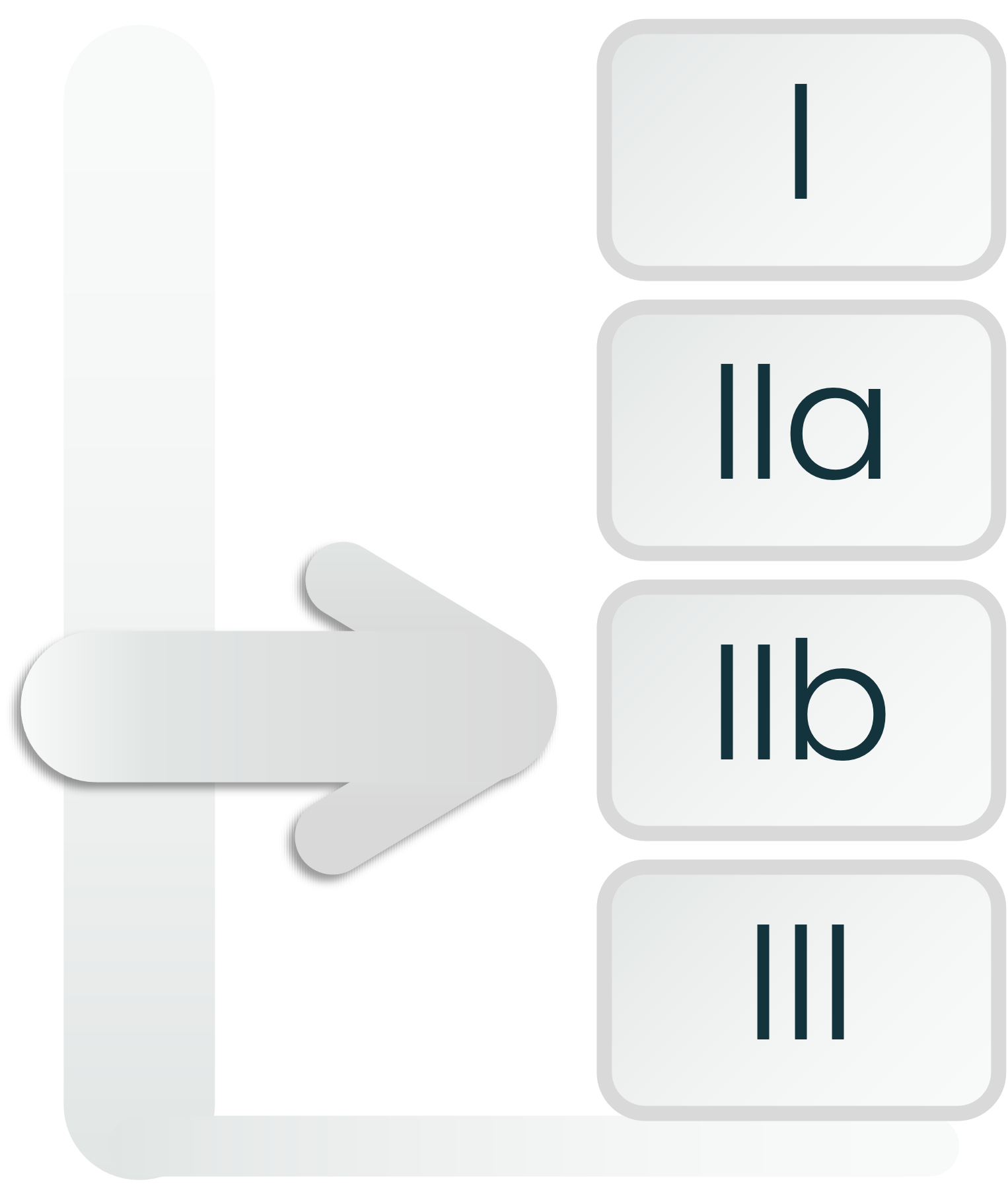
Class I to Class III (MDR) & Class A to D (IVDR)

Borderline, novel & high-risk classification rationales

Classification aligned with MDR Annex VIII and IVDR requirements

Clear rationale for regulatory and audit use

Experience across MDR, IVDR, and legacy frameworks

Medical Device & IVD Classification Support
Built for Clear Regulatory Decisions
Medical device and IVD classification determines your regulatory pathway, your evidence requirements, and whether a Notified Body is involved.
We define your classification position clearly, explain the reasoning behind it, and make sure you understand what it means before you commit to the next stage.
![[Bray Group]](https://images.squarespace-cdn.com/content/v1/648ad45845bc567a651a5946/ae61a748-1a76-4661-b20d-450c76304360/client-logo-bray-group.png)
![[Caristo Diagnostics]](https://images.squarespace-cdn.com/content/v1/648ad45845bc567a651a5946/bd30061c-0515-4b9e-af6e-e1f4816a6bd9/client-logo-caristo+diagnostics.png)
![[C the Signs]](https://images.squarespace-cdn.com/content/v1/648ad45845bc567a651a5946/0ddb7589-9acf-4306-8b71-018ad8af5252/client-logo-c-the-signs.png)
![[CooperVision Specialty EyeCare]](https://images.squarespace-cdn.com/content/v1/648ad45845bc567a651a5946/e1668db5-8828-41d3-9e8f-e5b720c56023/client-logo-coopervision-speciality-eyecare.png)
![[Innovia Medical]](https://images.squarespace-cdn.com/content/v1/648ad45845bc567a651a5946/8a226ce3-669f-4c83-b2f6-6b8895d4b784/client-logo-innovia.png)
![[LifeScan]](https://images.squarespace-cdn.com/content/v1/648ad45845bc567a651a5946/837d858d-8455-43e4-a323-3c7979e50568/client-logo-lifescan.png)
What You Get
✅ Classification Strategy,
✅ Rule-by-Rule Assessment,
✅ Borderline & Edge Case Analysis,
✅ Intended Purpose & Claims Review,
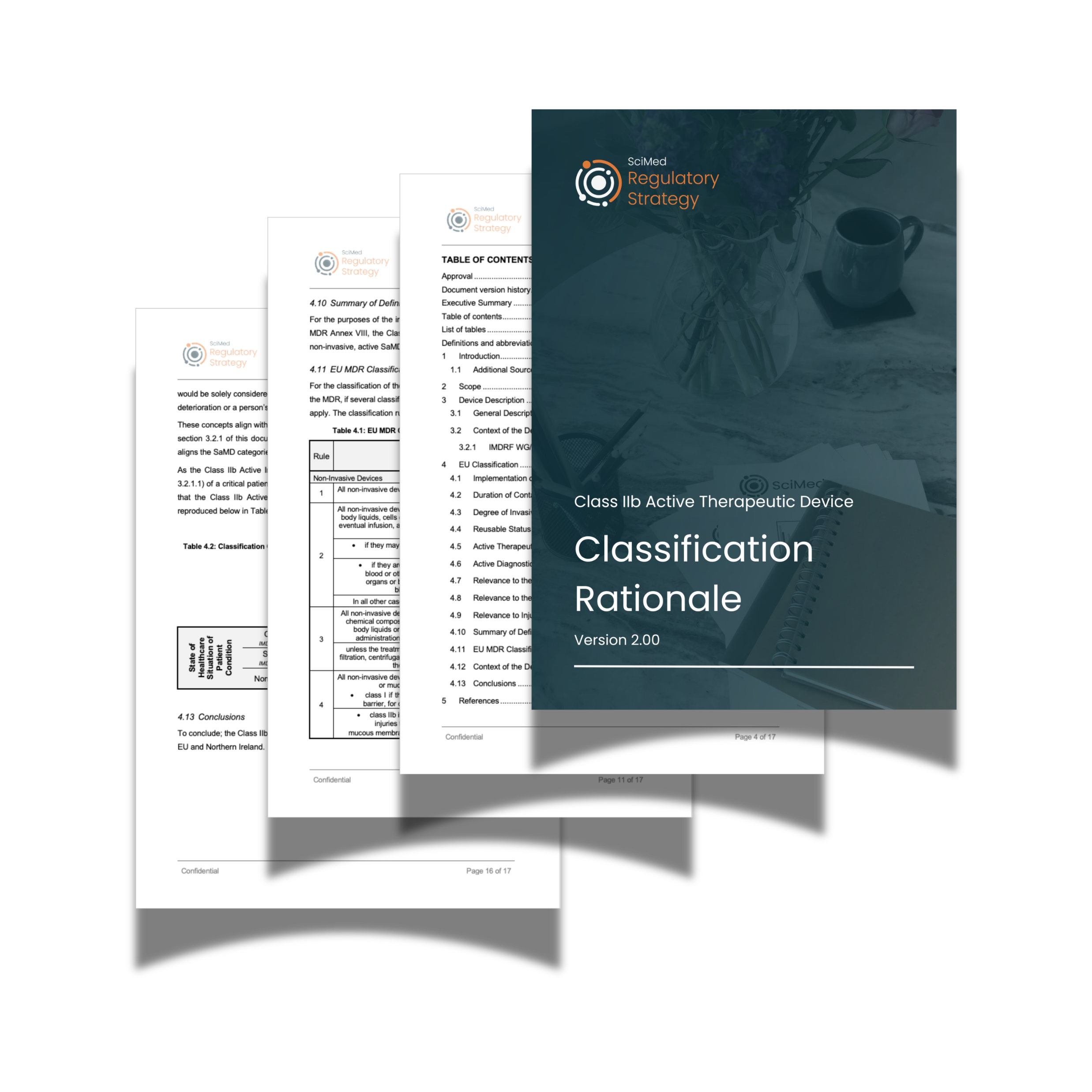
✅ Classification Rationale Document, and
✅ Regulatory Impact Summary
“A very smooth process. SciMed delivered exactly what I wanted — something I can submit if we're asked to defend our classification. Reasonably priced too, which isn't something I can say about most regulatory advice I've paid for.”
Miles Payling - Co-Founder; C the Signs

If Your Device Classification is Unclear, Everything That Follows is at Risk
Classification is one of the earliest regulatory decisions, but it affects everything that comes after.
If the classification is incorrect, poorly justified, or not clearly documented, it typically leads to:
Incorrect regulatory pathway selection
Unnecessary Notified Body involvement, or missing it entirely
Delays in submission or audit
Rework across technical documentation
Increased cost and extended timelines
In many cases, this happens even when teams believe they are “following the rules”.
The issue is not awareness of the rules.
It is whether the classification position is clearly reasoned and defensible.
What Your Classification Rationale Actually Needs to Demonstrate
Classification is not just assigning a class.
It is a structured interpretation of how your device or IVD fits within the regulatory framework — and how that position will be understood during review.
Before committing to a pathway, you should know:
Which rules apply and which do not
Where interpretation is required
Whether your intended purpose affects classification
Where regulators are likely to challenge your position
What the classification means for your wider regulatory programme
| Component | What this means in practice |
|---|---|
| Classification Strategy | We assess your device or IVD, intended purpose, and claims to determine the correct classification approach under MDR or IVDR. |
| Rule-by-Rule Assessment | We apply the relevant classification rules and explain the reasoning behind each step. |
| Borderline Analysis | Where classification is unclear, we identify the pressure points and define the most supportable position. |
| Intended Purpose Review | We assess how your wording affects classification and whether it introduces unnecessary regulatory burden. |
| Classification Rationale Document | You receive a clear, structured rationale suitable for internal use and regulatory submission. |
| Regulatory Impact Summary | We explain what your classification means for conformity assessment, evidence requirements, and timelines. |
Why Classification Requires More Than Rule Matching
Classification is not assessed on whether you selected a rule.
It is assessed on whether your interpretation holds up when questioned.
The difference between a position that is accepted and one that is challenged often comes down to:
How rules are interpreted in context
How borderline scenarios are handled
How clearly the reasoning is explained
Whether the implications are understood
Typical approach vs SciMed’s approach
| Typical consultancy | SciMed |
|---|---|
| Rule selection | Rule interpretation |
| Generic answer | Clear rationale |
| Isolated decision | Full regulatory context |
| Basic output | Decision-ready position |
Our role is not simply to assign a classification.
It is to define a position that:
Reflects a clear understanding of your device or IVD
Aligns with the applicable rules and guidance
Defended if challenged and can be explained
Supports the wider regulatory strategy
In some cases, classification is straightforward.
In many cases, it is not.
Where interpretation is required, our role is to make that explicit, not hide it.
If you are responsible for regulatory strategy, you already know that early classification decisions can either simplify the pathway, or create avoidable complexity later: You need clarity before you commit.
Worried this is you?
We’ll discuss your device, your intended purpose, and what your classification is likely to mean for your regulatory pathway.
We work with a limited number of projects at any one time to maintain quality and consistency.
SciMed’s Services are for You If…
You’re likely a good fit for SciMed’s Classification Service if you recognise yourself here:
You're launching a novel device…
…and the classification rules aren’t obvious, with significant commercial consequences riding on the answer.
You've been told your product is being up-classified under MDR or IVDR…
…and need a defensible rationale before your Notified Body submission.
Your product sits on a borderline…
…between medical device, medicinal product, cosmetic or biologic and you need a qualification argument that holds.
You're developing software or AI as a medical device…
…and need a Rule 11 (MDR) or Rule 1.4 (IVDR) rationale that reflects how your software actually functions, not a generic template.
Your Notified Body has challenged your stated classification…
…and you need expert support to respond with evidence rather than assertion.
You’re a start-up founder…
…and need to settle classification early so your regulatory strategy, budget and clincial plan are built upon the right foundation.
You value scientific and regulatory rigour…
…and won’t accept a classification rationale that collapses the moment a reviewer asks a follow-up question.
If you're looking for someone to confirm the classification you've already decided on, or to argue down the rule that applies to minimise your compliance burden, we're not the right fit. Our clients value honest assessment and evidence-based rationales over convenient conclusions.
Case Study Preview
Classification & Regulatory Specialists
-
![Headshot of a senior regulatory leader supporting SciMed's medical device expertise.]()
Selina McHarg - Senior Analyst
Selina is the team's IVDR specialist on classification work, applying Rules 1–7 across assays ranging from self-test through to companion diagnostic, and extending the same framework to MDR products that carry a significant diagnostic component. She combines a PhD in physiology with over a decade of academic research in biomarker discovery and molecular biology, experience that maps directly onto how IVDR treats intended purpose and clinical decision impact.
-
![]()
Nicola Edwards - Senior Analyst
Nicola specialises in classification for software, combination products, and emerging technologies, where the applicable rule is often contested or non-obvious. She combines a PhD in Translational Cardiovascular Science with training in software and AI devices to support Rule 11 rationales, SaMD classification, and classification strategy for cell and gene therapy, drug delivery systems, and nanotechnology-based products.
-
![Headshot of a clinical director endorsing SciMed's regulatory solutions.]()
Nadhim Bayatti - Senior Analyst
Nadhim focuses on classification for legacy devices and well-established technologies, where historic classification decisions need re-examining against current MDR and IVDR rules. He brings over two decades of postdoctoral research experience in neuroscience and molecular biology, alongside a PhD in Developmental Neuroscience, to support clear and defensible classification rationales for products carrying long regulatory histories.


Leadership & Project Oversight
-
![Headshot of a senior regulatory leader supporting SciMed's medical device expertise.]()
Alastair Selby - Founder & Regulatory Consultant
Alastair leads regulatory strategy, client engagement, and oversight across all Classification projects, with direct specialist experience in borderline products, pharmaceutical-to-device reclassification, and combination products. He brings over a decade of consultancy experience alongside active involvement in international standards development (BSI CH/194) and in shaping governmental policy on medical device regulation, keeping his work aligned with current MDR and IVDR expectations.
-
![]()
Anna Le Fevre - Business Manager
Anna oversees project coordination, financial operations, and client communication across engagements, ensuring delivery is structured, efficient, and well-managed throughout. With over 10 years' experience in accounting and audit environments, she supports consistent execution and a high-quality client experience.


Are SciMed the Right Fit?
Our approach is typically suited to teams who:
Need a classification position that will withstand scrutiny
Require clarity before committing to a regulatory pathway
Value structured reasoning and regulatory alignment
It may be less suitable if:
You are looking for a low-cost, quick classification answer
You want a simplified response without detailed justification

Start with a 30-minute Classification Discovery Call
We begin by understanding your device or IVD, your intended purpose, and where you are in the regulatory process.
You will leave the call with:
A clearer view of your likely classification
Insight into where risks or ambiguity may sit
A defined next step if you choose to proceed
There is no obligation to continue after the call.
We typically work with a limited number of projects at any one time to maintain quality.